Cinder Block Raised Bed
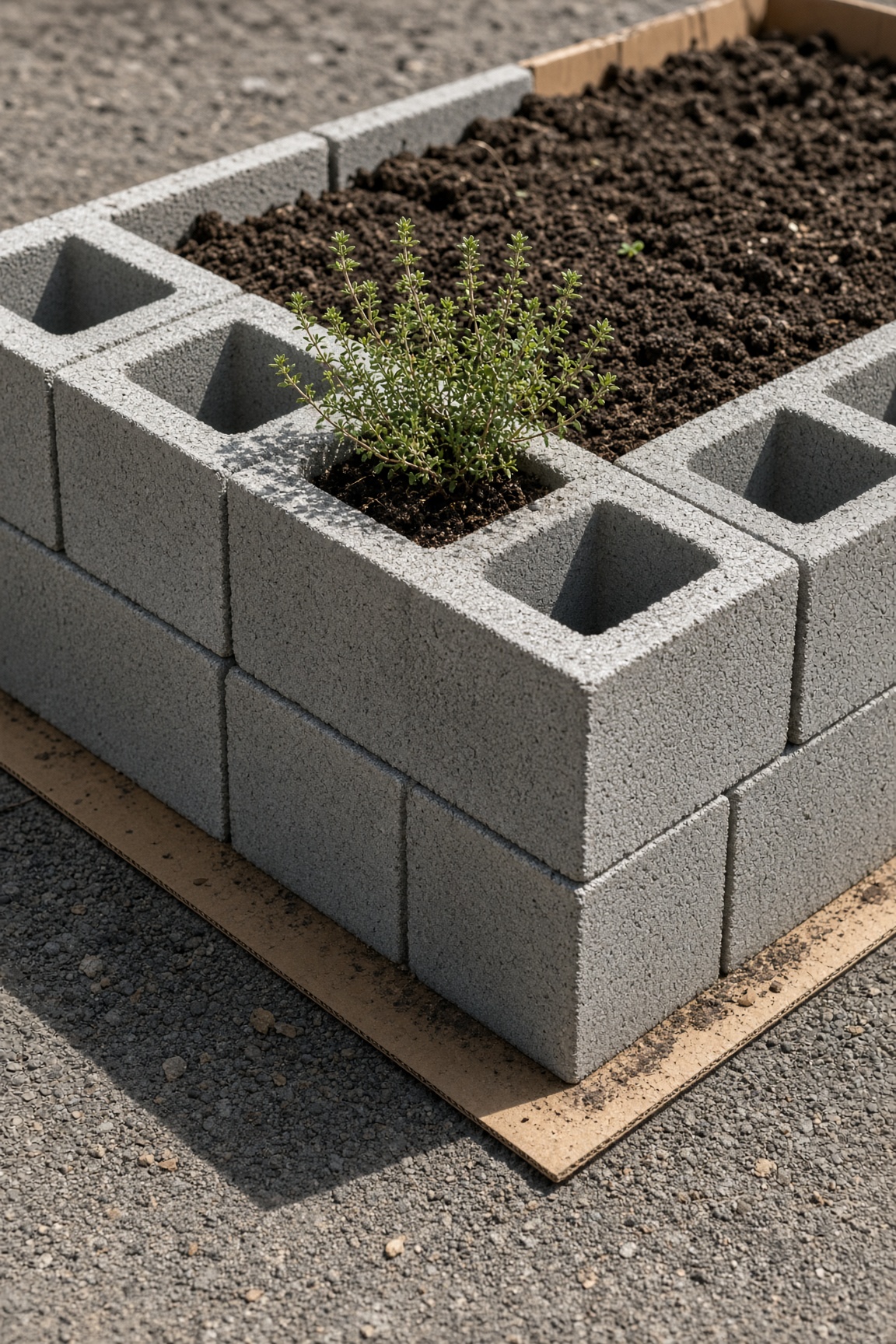
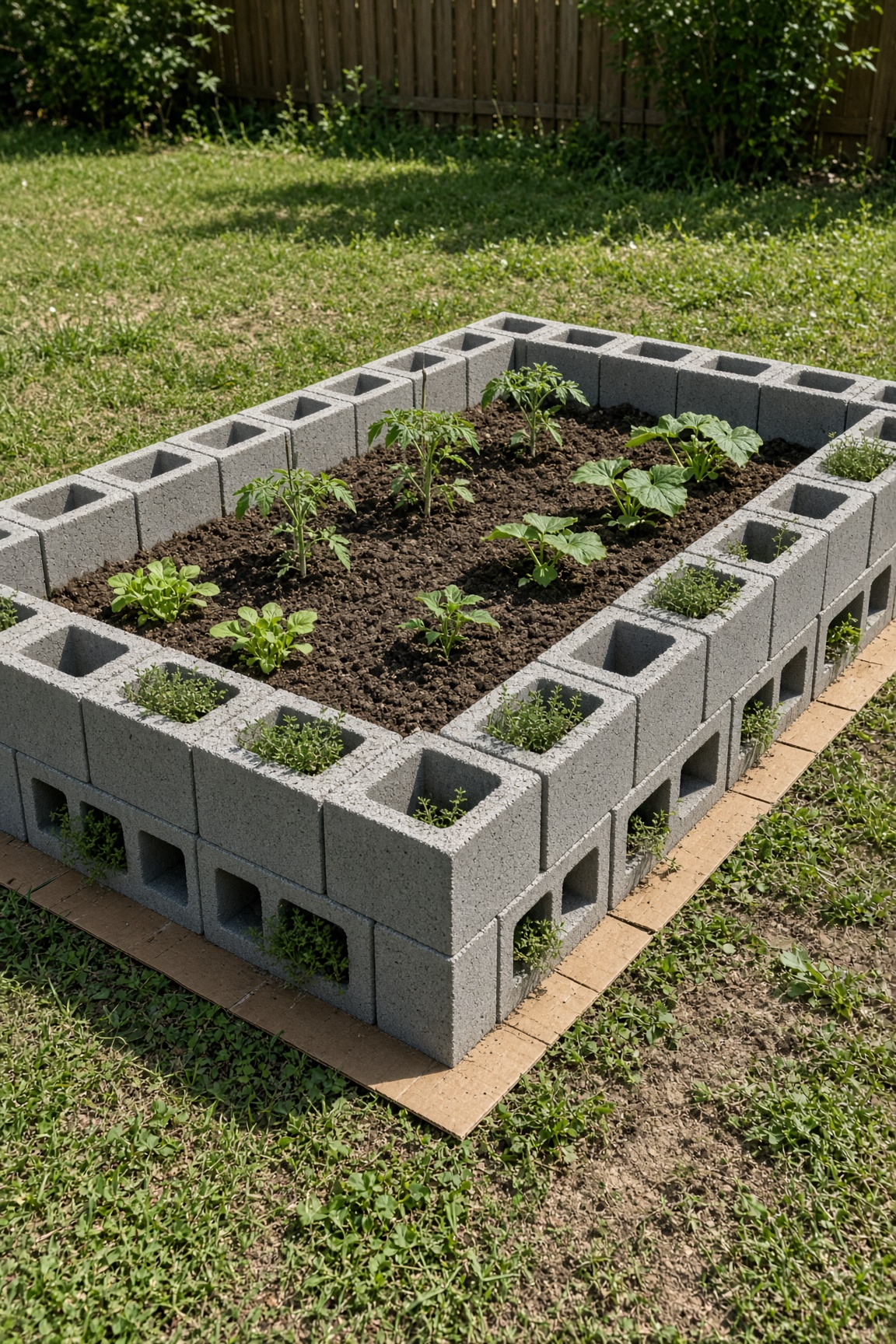
A durable, pest-proof raised bed built from stacked concrete blocks. The holes can hold herbs or be capped for a clean look.
Estimated time
About 1 hour to stack (level pad)
Lifespan
20+ years
Soil needed
32 cubic feet (about 1.2 cubic yards)
Weight empty
600–800 lbs
Weight full
2,400+ lbs
Best for
Vegetables, herbs, and flowers in a permanent, low-cost bed
Placement
Lay the first course on level ground. If the ground isn’t level, the second course walks. Ground only — a full bed weighs 2,400+ lb.
Parts to Buy
| Part | Quantity | What You Use Them For |
|---|---|---|
| Concrete blocks, 8×8×16 inch | Dry-fit first, then double it | Perimeter walls — count your layout on the ground before buying |
| Cardboard or landscape fabric | 1 layer | Weed barrier under bed |
| Topsoil / compost / peat mix | 32 cubic ft | Bed fill |
- ·Optional: concrete block caps for a flat top
- ·Optional: construction adhesive for stacking more than one course
Steps
- 1Choose new concrete CMU blocks, not old fly-ash ‘cinder’ blocks of unknown origin.
- 2Clear and level the bed area. Spend the time here — if the first course isn’t level, the second course walks.
- 3Lay cardboard or fabric over the soil to suppress weeds.
- 4Dry-fit the first course on the ground in your chosen layout. Count the blocks before you buy; a 4×8 bed usually needs roughly 14–18 blocks for one course.
- 5Double the count for two courses. Stagger the joints like brickwork for strength.
- 6Check that corners are square and the first course is level in both directions.
- 7If stacking more than two courses, use construction adhesive between courses. For a 16-inch bed, adhesive is usually enough; mortar only if you go taller.
- 8Fill the bed with a mix of topsoil, compost, and aged manure.
- 9Use the block holes for herbs like thyme or oregano, or cap them. Don’t fill every core with soil — it dries out and looks messy.
- 10Water thoroughly to settle the soil before planting.
Tools needed
- ·Shovel
- ·Tape measure
- ·Level
- ·Work gloves
Common mistakes to avoid
- ·Using old mystery demolition ‘cinder’ block — choose new concrete CMU, not fly-ash blocks
- ·Guessing the block count without dry-fitting the layout on the ground first
- ·No cardboard or fabric under the bed — weeds come up through the holes
- ·Filling every core with soil — it dries out and looks messy; use holes for herbs or cap them
- ·Building too tall without adhesive — over 2 courses needs construction adhesive or mortar
Maintenance tips
Brush off algae or moss yearly. Replace any cracked blocks. Cap the top holes if you don't want plants in them.
Community builds
See how other gardeners built their cinder block raised bed — and share photos of yours.
Sign in to view photos other gardeners have shared.
Sign in to share photos of your build.