Keyhole Garden Bed
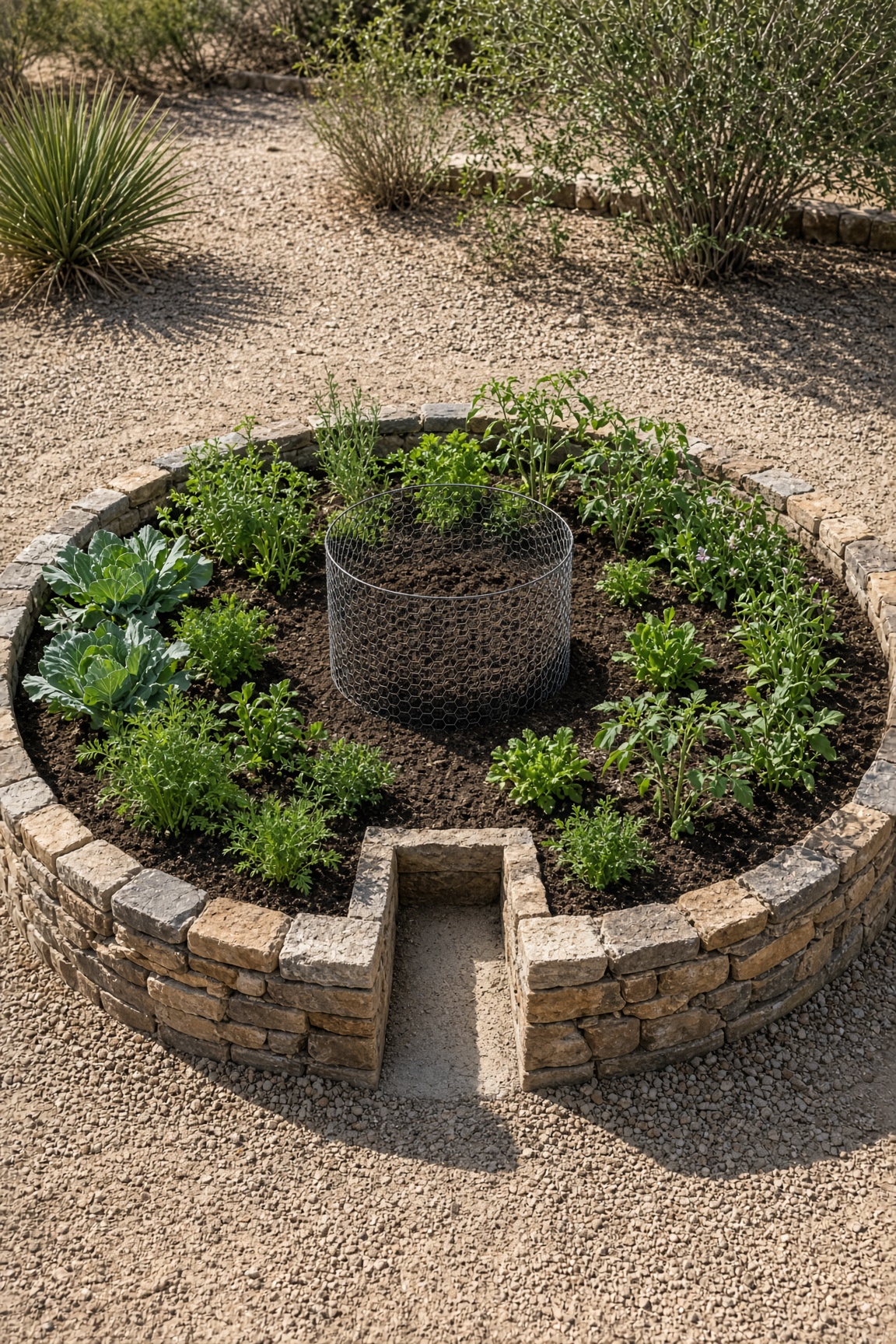
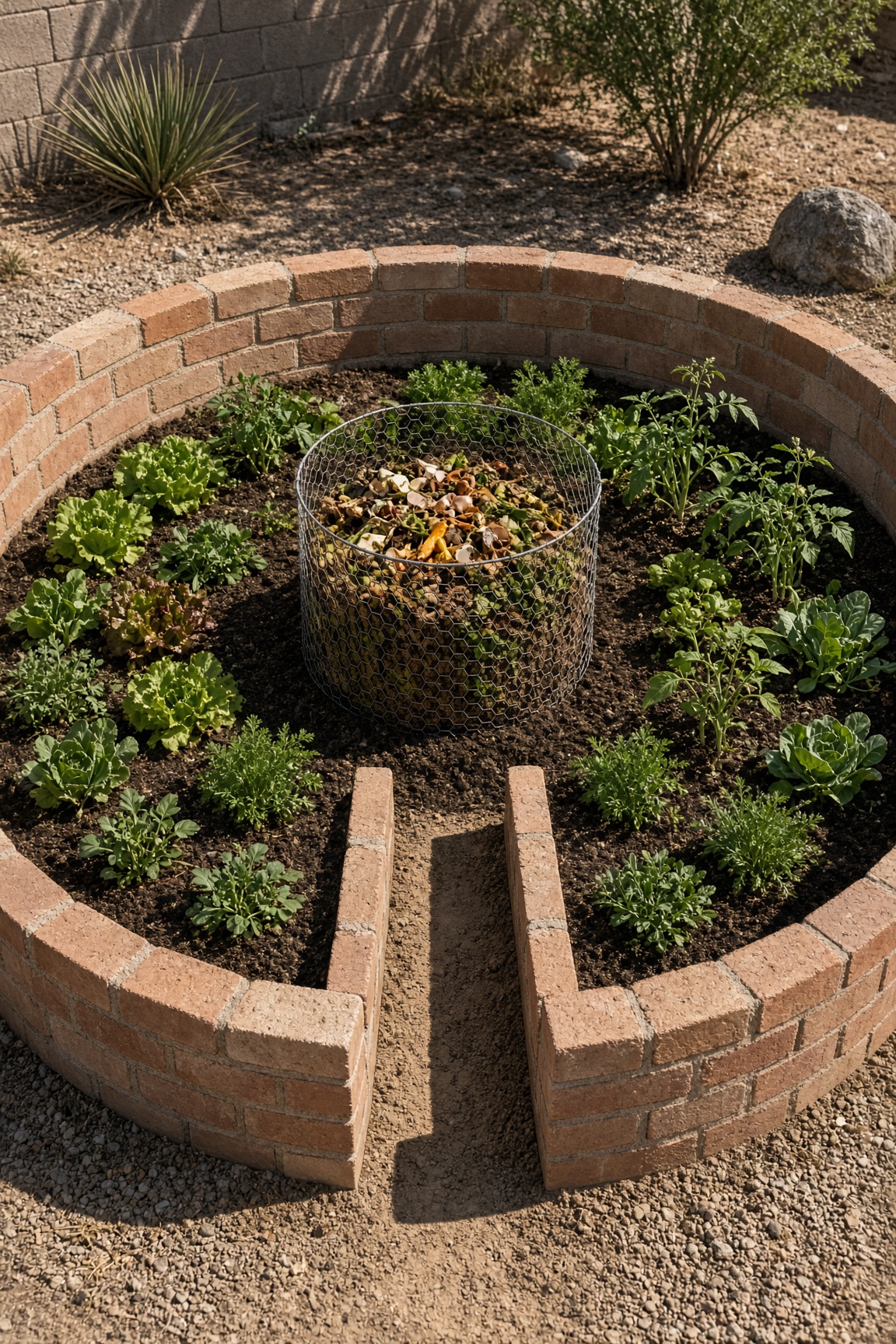
A circular raised bed with a notched walkway and a central compost basket. You water and dump scraps into the basket; moisture and nutrients move outward into the bed, so the plants feed from below.
Estimated time
Half day (frame + fill)
Lifespan
5–10 years
Soil needed
About 2–2.5 cubic yards of layered compostable fill and quality soil
Weight empty
20–40 lbs for the frame
Weight full
1500–2000 lbs
Best for
Vegetables, herbs, and flowers in hot, dry climates
Placement
Full sun. Keep the keyhole opening on the north side in hot climates so the compost tower does not shade the bed. Ground only — do not place a 1,500–2,000 lb filled bed on a wooden deck.
Parts to Buy
| Part | Quantity | What You Use Them For |
|---|---|---|
| Stacked stones, bricks, or rot-resistant wood boards | Enough for a 6 ft circle | Retaining wall |
| Chicken wire or 1/2" hardware cloth cylinder, 1 ft diameter × 3 ft tall | 1 | Central compost tower |
| Cardboard or newspaper | Several sheets | Sheet mulch base |
| Compost, aged manure, topsoil, straw | 2–2.5 cubic yards total | Layered fill |
- ·Optional: small hinged lid for the compost tower
Steps
- 1Mark a 6 ft diameter circle on flat ground. Six feet is the widest circle you can reach across from a central walkway.
- 2Build the outer wall about 24–30 inches tall using stone, brick, or rot-resistant wood.
- 3Leave a 2 ft wide notch in the circle for a keyhole walkway pointing toward the center.
- 4Lay cardboard or several layers of newspaper over the entire floor to smother grass and weeds.
- 5Set the wire cylinder in the center to form the compost tower.
- 6Layer fill materials like a lasagna: straw, leaves, compost, topsoil, repeating until near the top.
- 7Water each layer as you build so the bed settles evenly.
- 8Fill the compost tower with kitchen scraps, coffee grounds, eggshells, and garden trimmings.
- 9Top the bed with 3–4 inches of quality soil or compost.
- 10Plant shallow-rooted crops the first season; deeper roots can follow in year two after the bed settles.
- 11Water through the basket, not just the soil surface, so nutrients and moisture move out to the roots.
Tools needed
- ·Shovel
- ·Wheelbarrow
- ·Tape measure
- ·Work gloves
- ·Utility knife or scissors for cardboard
Common mistakes to avoid
- ·Building the circle too wide to reach the center — 6 ft is the max you can reach from the walkway
- ·Only sprinkling the soil surface instead of watering the compost basket
- ·Using the wrong materials in the compost tower — avoid meat, dairy, and oils
- ·Using chicken wire where rats are a problem — switch to 1/2" hardware cloth
- ·Building wood walls right against wet fill — they rot; use stone, brick, or rot-resistant boards
- ·Not wetting the layers as you build
- ·Planting deep-rooted crops the first season before layers have settled
Maintenance tips
Water through the central compost tower weekly so nutrients leach out into the bed. Add kitchen scraps to the tower each month. Top-dress with compost each spring because the bed will settle.
Community builds
See how other gardeners built their keyhole garden bed — and share photos of yours.
Sign in to view photos other gardeners have shared.
Sign in to share photos of your build.