Pollinator Meadow Patch
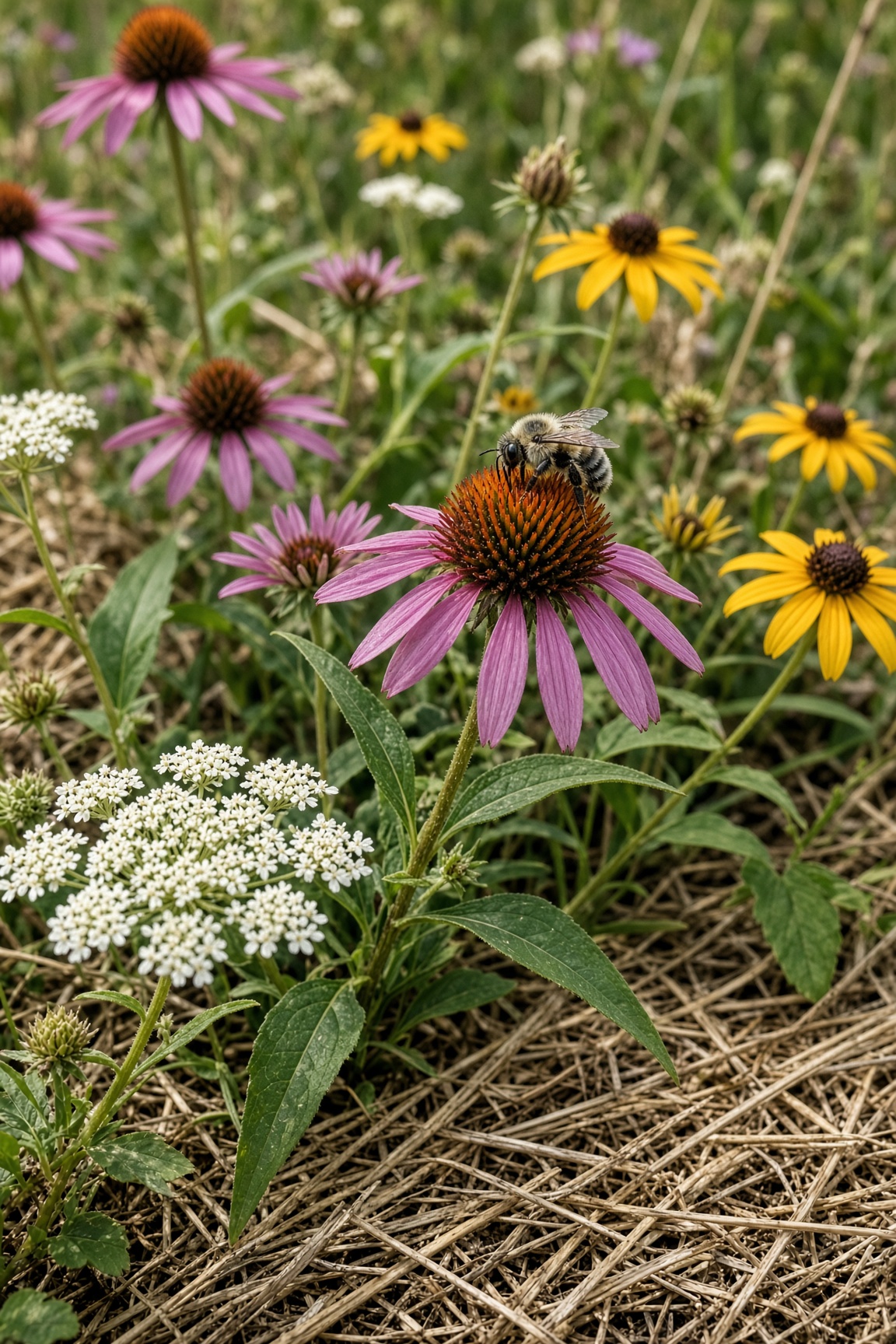
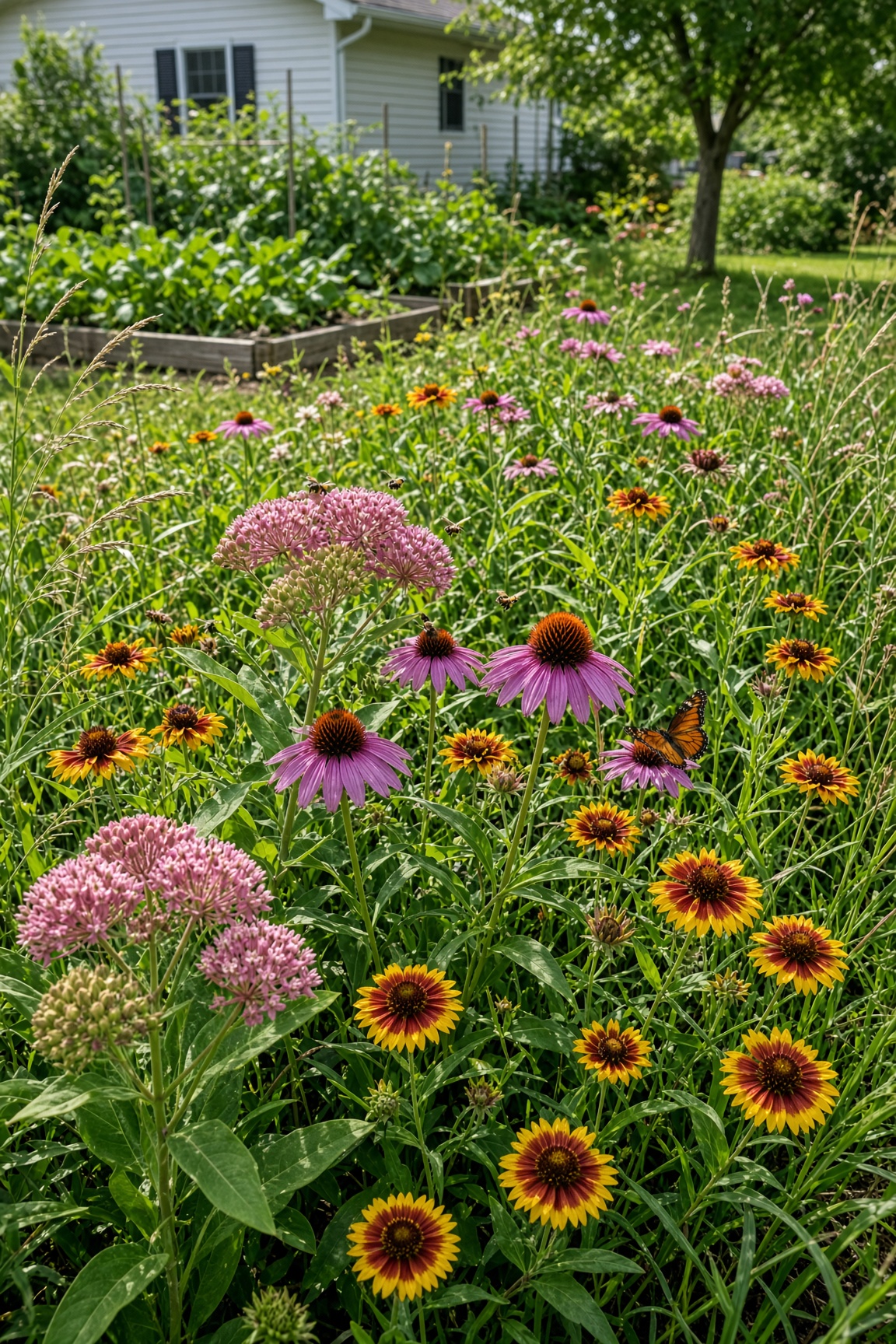
A low-maintenance flower patch planted with native blooms that feed pollinators from spring through fall.
Estimated time
An afternoon to prep, weeks of waiting, then about an hour to sow
Lifespan
Perennial patch returns yearly
Soil needed
None — sow directly into prepared ground
Weight empty
N/A
Weight full
N/A
Best for
Bees, butterflies, hoverflies, and beneficial wasps that protect your vegetable garden
Placement
Sunny spot with some wind protection. Group with other pollinator plants if possible. Pairs well with a mason bee house nearby.
Parts to Buy
| Part | Quantity | What You Use Them For |
|---|---|---|
| Native wildflower seed mix | 1/4 lb per 100 sq ft | Flowers |
| Straw mulch | 1 bale | Protects seed and soil |
| Cardboard | Enough to cover area | Sheet-mulch weed barrier |
- ·Optional: native grass seed for structure
- ·Optional: small sign asking visitors not to mow
Steps
- 1Choose a sunny, low-traffic corner of the yard.
- 2Remove existing grass or weeds by sheet-mulching with cardboard for 4–6 weeks.
- 3Buy a seed mix native to your region. 'Wildflower mix' from a big-box bag is often annual filler plus invasives.
- 4Rake the soil lightly to create a seedbed. Poor soil is OK — don't dump fertilizer on it.
- 5Mix the seed with fine sand for even spreading.
- 6Broadcast half the seed walking north-south, then the other half east-west.
- 7Lightly rake to cover seeds 1/4 inch deep.
- 8Press the soil with a roller or by walking on it.
- 9Water gently to settle. Keep moist until it sprouts, then back off.
- 10Put up a small sign so a well-meaning visitor doesn't mow the patch.
- 11Mow once the first year after flowers set seed to about 12 inches.
Tools needed
- ·Shovel or hoe
- ·Rake
- ·Hose or watering can
Common mistakes to avoid
- ·Buying a generic 'wildflower' mix from a big-box store — it's often annual filler plus invasives that don't help local pollinators
- ·Using seed that isn't native to your region — pollinators evolved with local plants
- ·Dumping fertilizer on the patch — poor soil is fine and often better for native flowers
- ·Spraying insecticides on the vegetable garden next door — it kills the insects you're trying to feed
- ·Mowing too short or too often in the first year
- ·Letting the patch dry out right after sowing
Maintenance tips
First year: mow once after flowers set seed to about 12 inches. After that: mow in late winter at 4–6 inches. Remove aggressive weeds by hand. Add new seed in bare spots each spring.
Community builds
See how other gardeners built their pollinator meadow patch — and share photos of yours.
Sign in to view photos other gardeners have shared.
Sign in to share photos of your build.