Raised Bed Critter Cage
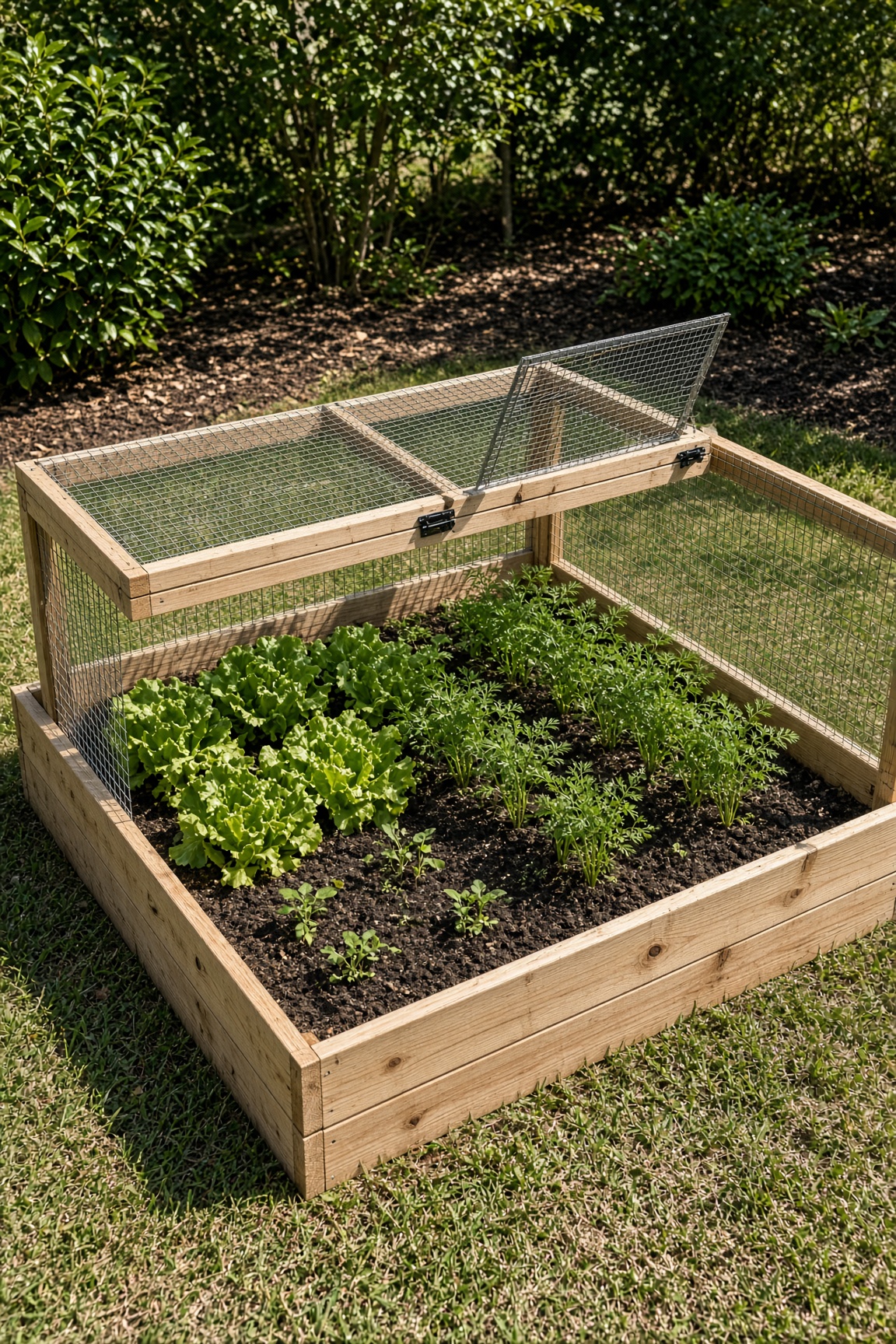
A lightweight wood and wire cage that sits on a raised bed to protect short crops from chewing and digging pests.
Estimated time
1.5 – 2.5 hours
Lifespan
8–12 years
Soil needed
None — protective cover
Weight empty
25–45 lbs
Weight full
35–55 lbs with mesh
Best for
Greens, carrots, beets, and other low crops that rabbits and squirrels love. Tomatoes and kale will hit a 2 ft roof, so use this for shorter plants.
Placement
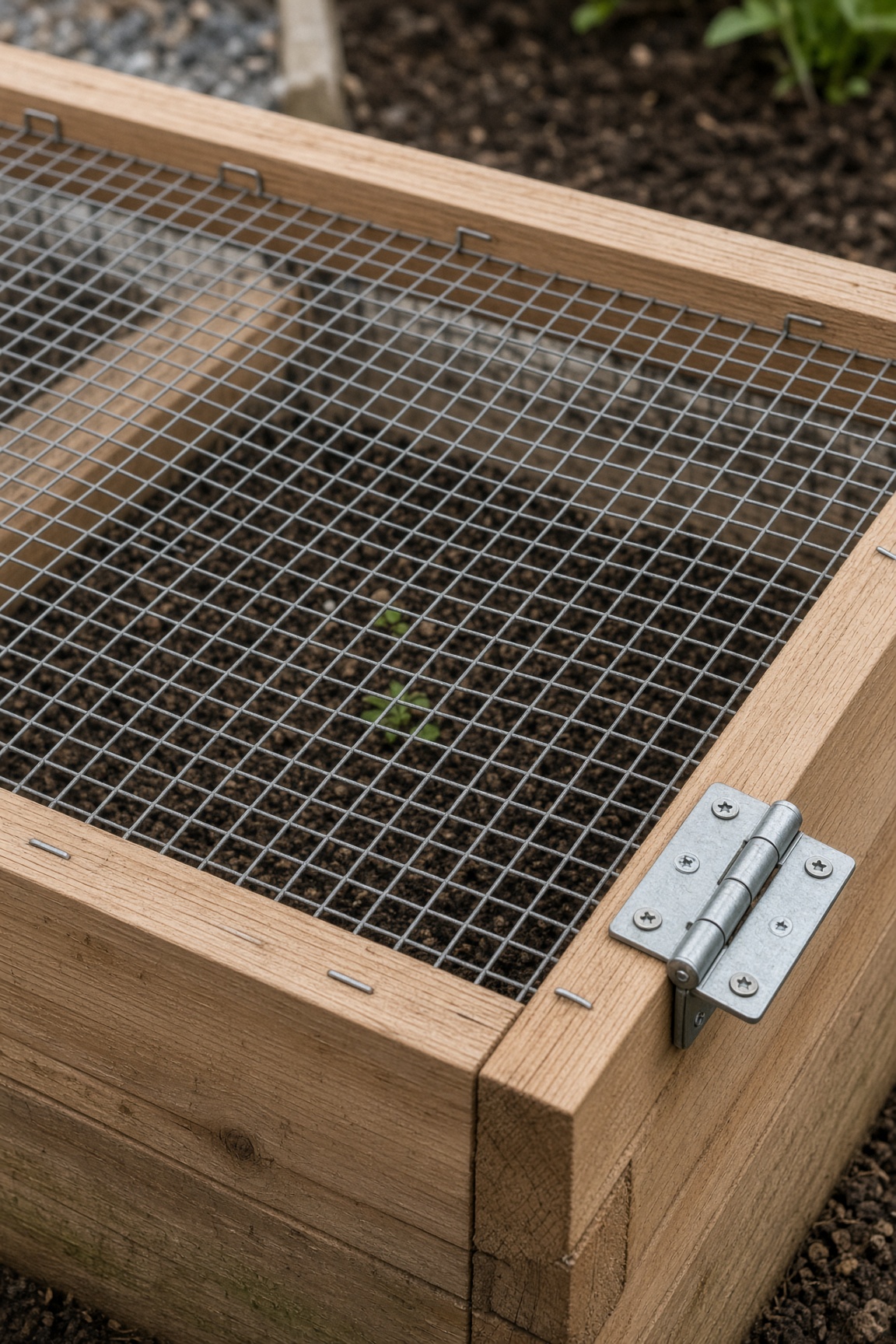
Build it to fit your raised bed exactly. Staple the mesh on the outside of the frame so animals can't push it inward. Anchor the cage to the bed or weigh the base so raccoons, dogs, and wind can't slide it off.
Parts to Buy
| Part | Quantity | What You Use Them For |
|---|---|---|
| 2×2 lumber, 8 ft | 7 | Bottom rails, top rails, uprights, and lid rib |
| 1/2 inch hardware cloth, 4 ft × 25 ft | 1 | Walls and top |
| Exterior hinges | 2 | Lid |
| Exterior screws, 2 inch | 1 lb | Frame |
| Ground staples, U-bolts, or weights | 4–8 | Anchor cage to bed or ground |
- ·Staples for attaching mesh
- ·Hook-and-eye latch for lid
- ·Optional: shade cloth cover for summer
Steps
- 1Cut the 2×2s: four 4 ft bottom rails, four 8 ft bottom rails, four 2 ft uprights, and one 8 ft center rib for the lid. (A 4×8 lid needs support or it will sag.)
- 2Build a 4×8 foot bottom rectangle to match your bed top.
- 3Screw the 2 ft uprights at each corner and at the mid-points of the 8 ft rails.
- 4Attach a matching 4×8 top rectangle to form a box frame.
- 5Staple 1/2 inch hardware cloth around all sides and the top, keeping the mesh on the outside of the frame.
- 6Build the lid as two 4×4 hinged doors (or one 4×8 lid with a center rib) so it won't sag.
- 7Hinge the lid(s) to the top frame and add a hook-and-eye latch.
- 8Set the cage over the bed and anchor it with ground staples, U-bolts, or weights on the base rails.
- 9Plant and harvest through the hinged lid. Open the lid on sunny days when squash, cucumbers, or other pollinator-dependent crops are flowering.
Tools needed
- ·Circular or miter saw
- ·Cordless drill / driver
- ·Staple gun
- ·Wire cutters
Common mistakes to avoid
- ·Not buying enough lumber — a 4×8×2 box needs about 56 ft of 2×2 (seven 8-footers), not four
- ·Mesh holes too big — baby rabbits squeeze through; use 1/2 inch hardware cloth, not chicken wire
- ·One big 4×8 lid — a 2×2 frame that long will sag; hinge two 4×4 doors or add a center rib
- ·No door — harvesting is a pain
- ·Frame not anchored — animals push or slide it off
- ·Mesh on the inside — rabbits and squirrels can push it off the staples
- ·Forgetting pollinators — 1/2 inch mesh is tight for bumblebees; open the lid when squash or cucumbers flower
Maintenance tips
Check mesh for holes each spring. Tighten anchors after wind. Oil hinges on the lid. Open the lid during bloom time for crops that need bee pollination.
Community builds
See how other gardeners built their raised bed critter cage — and share photos of yours.
Sign in to view photos other gardeners have shared.
Sign in to share photos of your build.